Guide to Buying Gluten-Free Products on Passover

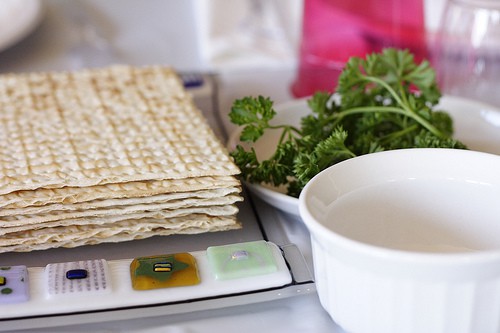
Matzah and Parsley

In Jewish communities across the globe, stores are stocking shelves with Kosher for Passover (KFP) products. And people with celiac disease, or their parents, whether Jewish or not, are stocking up on KFP foods for their children. What’s the connection?

The central food of the week-long Jewish holiday of Passover is matzah. Matzah can be made of any of five species: barley, oats, rye, spelt and wheat. Wheat is the only kind generally available. Because of the quantities required and the strict rules surrounding its production, matzah is generally made in a separate factory.

Eating matzah is an important part of the Seder, the festive meal served on the first night of Passover. This doesn’t concern non-Jews with celiac. What’s important for celiac sufferers is the prohibition against leavened foods, or chametz.

Continue reading...


Handle Raw Chicken Safely to Prevent Illness

I read in the Israeli newspaper Haaretz that there’s been a seven-fold increase over the last twenty year in the number of children hospitalized with intestinal ailments caused by campylobacter, a bacterium commonly found in raw poultry. More than half of children admitted to the hospital for intestinal problems tested positive forthe bacterium.

The newspaper (print, Hebrew version) reviewed safe methods for handling raw chicken:

Continue reading...

Recipe: Challah Bread with Sponge Method

Bread making is an art as well as a science, and may take a while until you get the kind of challah you want. It takes more time than most recipes on this site.

My friend Miriam Kresh of Israeli Kitchen suggests using less yeast in baking, leading to a lighter, airier bread with less yeasty taste. But it involves a longer rising time. She helped me work out the recipe below.

A sponge contains all of the yeast and liquids, and about two-thirds of the flour called for in the recipe. It allows you to use less yeast, compensated for by a longer rising time. This means that you end up with an airier dough with more flour taste than yeast. Sometimes it consists of only the water, yeast, and the majority of the flour.

Continue reading...

The Potato Cake Mystery

Potato cakes are a food I remember fondly from my childhood. My mother made these crispy treats often, for two reasons: First, the main ingredient was leftover potatoes, and second, they cooked in the broiler.

Continue reading...

Friday Roundup #28: Purim and the Olympics

Purim Mouse

The Kosher Cooking Carnival is up at Adventures in Mamaland. PhD in Parenting wrote on the irony of fast-food companies sponsoring the Olympics. What do you think? Below are posts from Cooking Manager for February 14-27: In Why You Should Finish Everything on Your Plate, I explain why you should scrape plates to save food […]

Continue reading...

Guest Recipe: Grandma Rose’s Hamantashen

Thanks to Norma for sending in this recipe. Purim, the Jewish holiday celebrated this Saturday evening through evening. Hamantashen are meant to remind us of the three-cornered hat supposedly worn by Haman, the villain in the biblical book of Esther that will be read in the synagogue.

Hamantashen are made from any kind of rollable cookie dough. Cut the dough into circles, then fill and pinch into a triangle shape so the filling shows through on top.

This Hamentaschen recipe comes from Grandma Rose. The cookie is based on a classic sour cream cookie— light and airy. It’s one of the few Hamentaschen recipes where you actually enjoy eating the cookie that surrounds the filling! I sometimes make the cookie dough and leave the rounds plain.

Continue reading...

Sofrito and Shepherd’s Pie: Interview with Yonit:

Please welcome reader Yonit van de Metz of Collecting Hats for today’s interview.
Name, location, family: Yonit de Metz, Philadelphia, wife and work-at-home mom to two toddlers and lots of houseplants.

What do you remember about family meals when you were growing up? What was your mother’s cooking style?
I have realized recently how diverse my mom’s cooking style is. Besides the traditional Jewish foods she brought from her own family she learned to cook Puerto Rican food from my grandmother and aunt. She also made Italian, Chinese, American, Mexican, and all kinds of different things. We have been known to have Thanksgiving meals with kugel, matzo ball soup, arroz y gondules, Turkey, enchiladas, and flan next to the traditional pumpkin & apple pies.

Continue reading...

When Using Up Leftovers Is a Waste of Resources

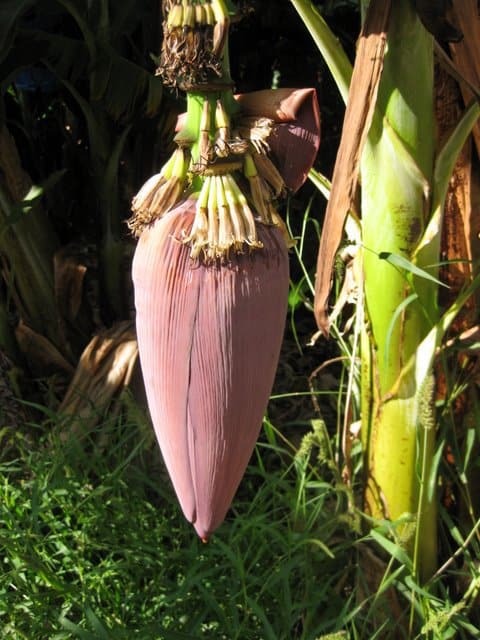
banan flower

Tesyaa left this comment on Why You Should Eat Everything on Your Plate:

Another thing about waste – quite often I’ve tried to avoid waste by making, say, a banana bread with overripe bananas, or using up rice in some other type of dish. Those items use energy to cook, and use other ingredients. If there is no real need for banana bread, making it to use up old bananas just wastes oil, eggs, sugar, & flour.

To me, avoiding foood “waste” is only helpful if it frees up other food items. If not, it’s not doing anyone any good.

I’m not sure what you mean when you write “there is no real need for banana bread.”

Continue reading...

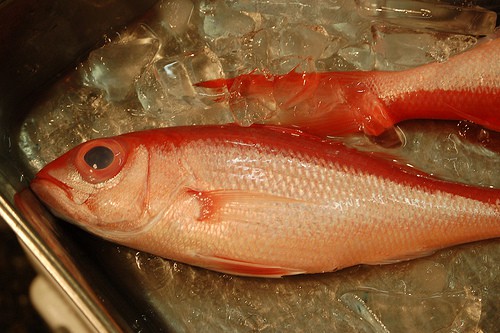
Red Snapper with Lemon and Dill

Wednesday is Recipe Day at CookingManager.Com.

Yesterday I went for a walk to our local shuk (open air market).

I wasn’t in the mood to cook, so when I passed the fish stand I knew that’s what I would get. Fresh fish is so easy to make, and the red snapper cost only $5 for three medium-sized fish.

Continue reading...

Brightening a Bleak Culinary Landscape: Interview with Robin

Reader Robin

Name, location, family, website

Robin, Central Israel, work-at-home mom of 2

Personal blog: http://aroundtheisland.blogspot.com/

Photography blog: http://aroundtheislandphotography.com/

What do you remember about family meals when you were growing up? What was your mother’s cooking style?

We always ate dinner as a family. Meals were very “American” – a meat, a vegetable or two, usually half a grapefruit or a slice of melon as an appetizer. The style for weekday meals was casual, with an emphasis on quick and easy. More elaborate meals were saved for weekends or company (but only tried and true – my mother never tried a new dish when company was coming. Still doesn’t for that matter.)

How is your cooking style different from your mother’s? We tend to favor much more ethnic cooking – Thai food is my “what to cook when there’s nothing to cook” staple, but I’m just as likely to throw together enchiladas or a vegetarian curry or a sauce for my husband’s homemade pasta. I tend to favor a lot of “Moosewood” style dishes and one-bowl with everything in it meals while my husband is all about dough – he bakes all our bread, keeps us well stocked with homemade pasta, anything as long as it involves dough. It’s a hobby and a stress reliever for him.

Continue reading...